
People Over Posts: Why We Keep Losing Time to a Screen
A woman spends her lunch break at work reading the comments under a news post, and for the rest of the afternoon she’s quieter than usual. Nothing happened to her today. Nobody said a cross word to her face. But she’s carrying something now, some collected weight of a hundred strangers’ worst moments, and it colors the rest of her day even though she couldn’t tell you a single one of their names an hour later.
That’s the strange thing about the anger we pick up online. It doesn’t feel like it belongs to anyone in particular, so it settles on everyone.
Choose Real People: What We Used to Know About Our Neighbors
Think about how differently we used to get our sense of other people. You’d meet someone at the hardware store who had opinions you couldn’t stand, but you also knew he’d driven two hours to sit with a sick friend, or that he coached the local kids’ team for nothing every fall for a decade. The bad opinion didn’t disappear. It just had to sit next to everything else you knew about him, and somehow that made it smaller.
Now a person can form a whole opinion of “people like that” from fifteen seconds of someone’s worst sentence, clipped out of a context we’ll never see, chosen for us because it’s the kind of thing that keeps us watching. We don’t meet the person. We meet the moment somebody decided we should be angry about.
And it works both ways. Somewhere else tonight, someone is watching a clip of people like us, at our worst, and deciding the same thing.
Be Present: The Quiet Loneliness of a Full Room
There’s a particular kind of loneliness in that. Not the loneliness of being alone, but the loneliness of being surrounded by people you’ve quietly decided not to trust. A father scrolling next to his teenager on the couch, both of them technically in the same room, both somewhere else entirely. A woman texting her sister less because the last three calls turned into arguments about things neither of them can fix. A man who used to look forward to Sunday dinner with his in-laws and now dreads the moment someone brings up the news, so he says less, and eats faster, and leaves early.
Nobody decided to lose these people. It happened in small steps. One avoided topic. One shortened phone call. One family group chat that went quiet because it got easier not to post than to risk the reply.
Family Connection: What Gets Lost First
What gets lost first is usually the smallest stuff, and that’s exactly why we don’t notice it going. The two minutes at pickup where you used to ask a neighbor how her mother was doing after surgery. The habit of calling your cousin just to hear about his kid’s first day of school, not because you needed anything from him. Nobody mourns those minutes when they disappear. They just stop happening, and one day you realize you haven’t had an easy, unremarkable conversation with someone in longer than you can say.
Screen Free Life: What the Phone Can’t Give You Back
There’s a version of this that isn’t about politics at all. It’s simpler than that. It’s about how much of a day gets handed to something that was never going to love you back. The phone doesn’t know your kids’ names. It doesn’t remember your father’s birthday or notice when you’ve had a hard week. But it’s very good at making sure you have somewhere else to be angry, and if you let it, it will happily take the hour you meant to spend on your porch, or at your kid’s game, or just sitting quietly next to someone you love without needing to say anything at all.
Mindful Living: The Ordinary Choices That Get an Evening Back
Maybe the plainest thing anyone can do is notice the trade before it’s made. Put the phone in the other room before dinner. Let the outrageous stranger have the last word instead of you. Call the person whose politics annoy you and ask about something that has nothing to do with any of it. Small, almost embarrassingly ordinary choices. But that’s usually what it takes to get an evening back.
Save a Seat: Presence Over Posts
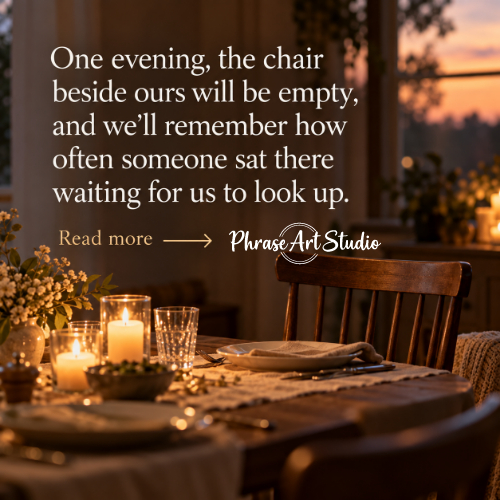
Because somewhere down the line, there’s a chair that used to have someone in it, and one day it won’t. Nobody’s last thought is going to be about the argument they won on their phone. It’ll be about the people who kept saving them a seat.
Lots of Love, Kristal




Leave a Reply